

The Deception Of The Roman Catholic Church & A Chronicle Of Roman Geneology
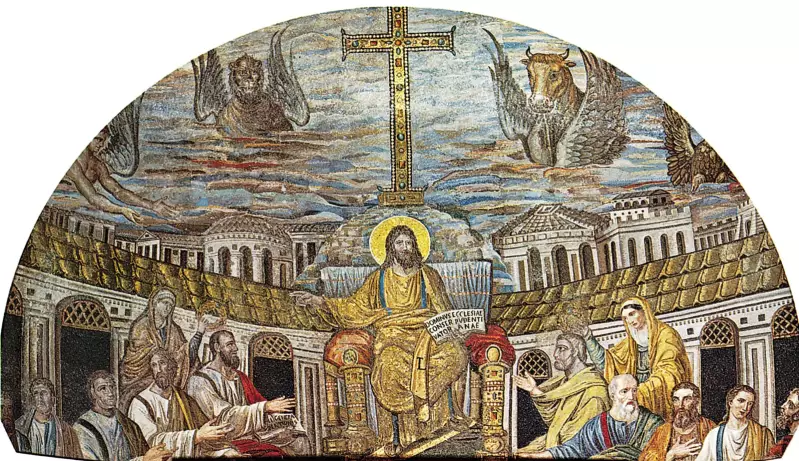
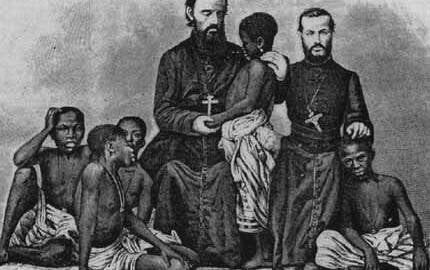
Institutional Christianity, the religion that deceived the world, stole the Holy Bible, kidnapped and enslaved the people of the Bible, and established the idea of white Jesus, and white Jews. A fabrication, hailed from Rome. When taking a further look into history, we see The Empire Of Rome spread just as The Crusaders spread Catholosism. In Year 70 A.D, General Pompey Under the authority of Rome, gave order to seige Jerusalem and massacre the House Of David. In the 1st century B.C King Herod under the authority of Rome, murdered hundreds of newborn male babes, to prevent a male savior from being born among the Hebrews in Bethlehem. Here we take a look into the history of institutionalized Christianity, along as the geneology of Roman and Greeko ethnic backgrounds.
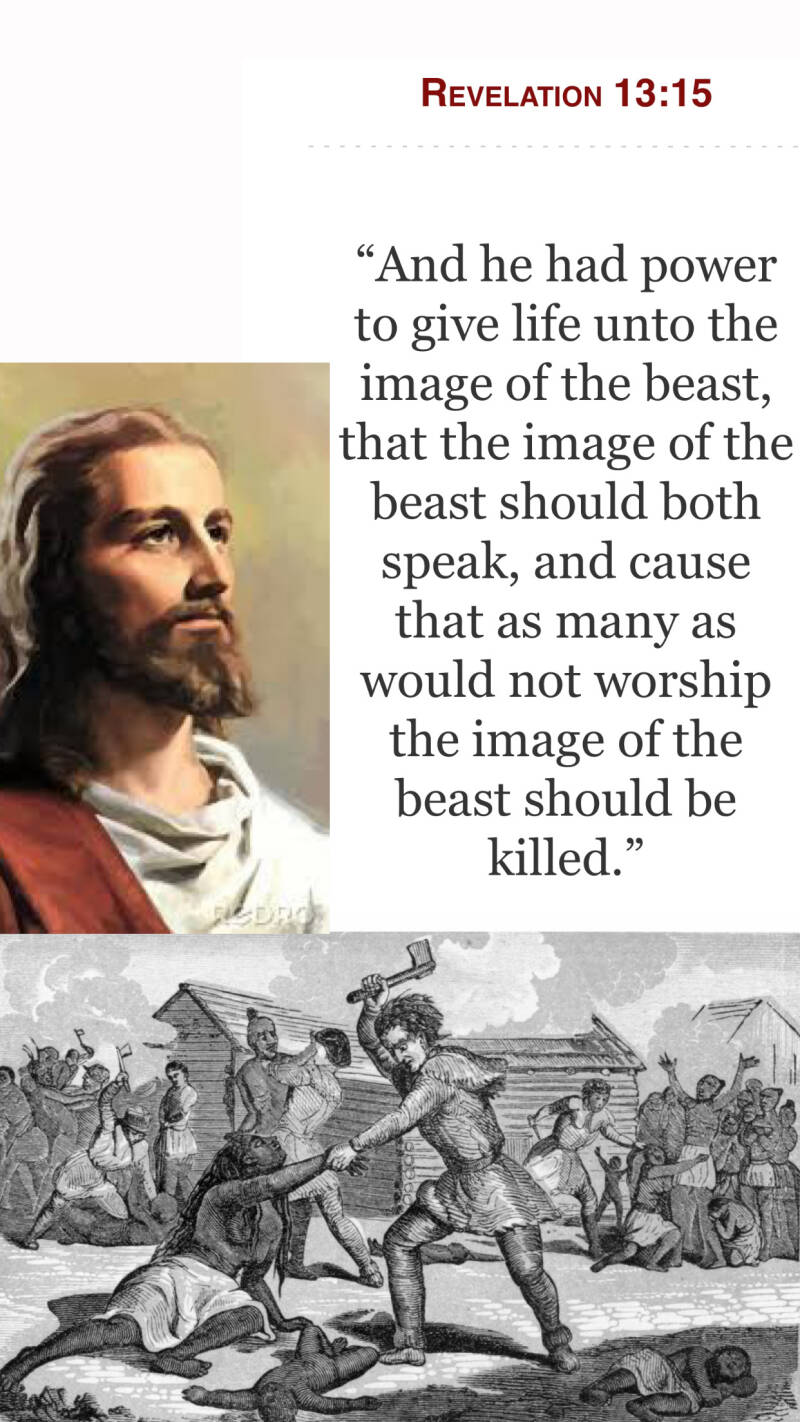

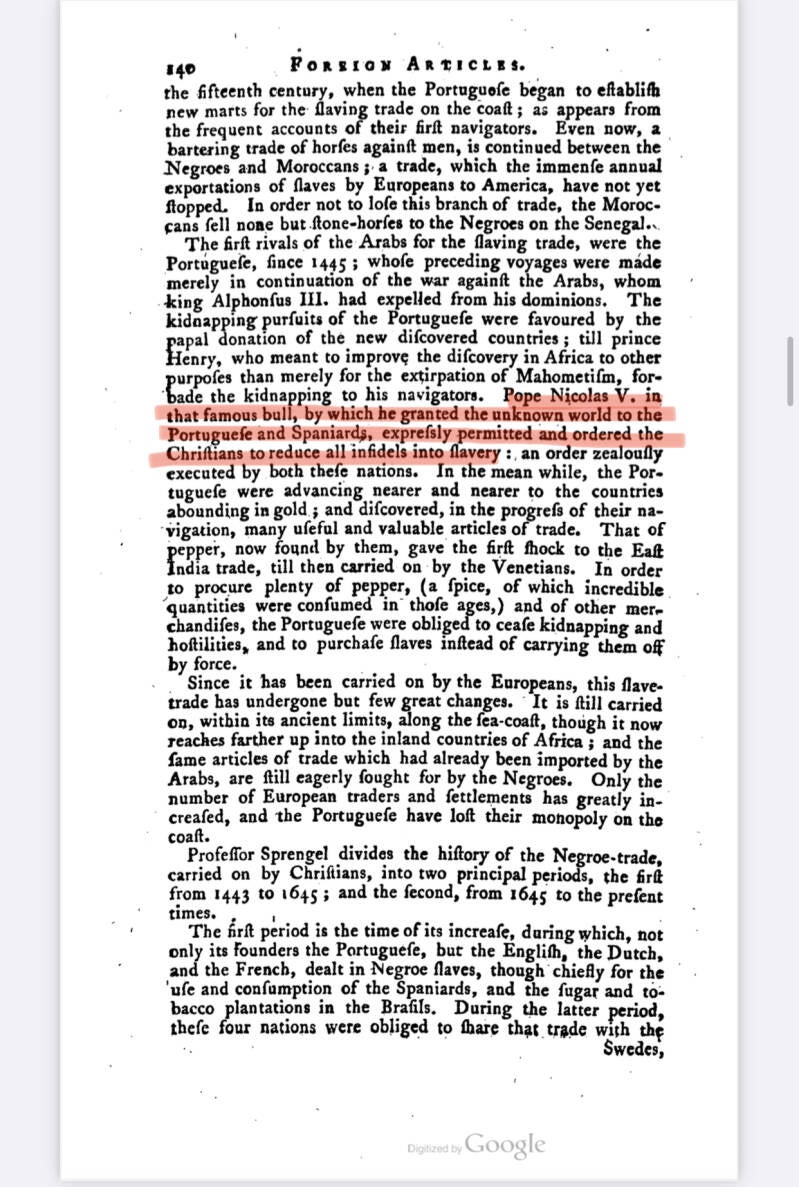
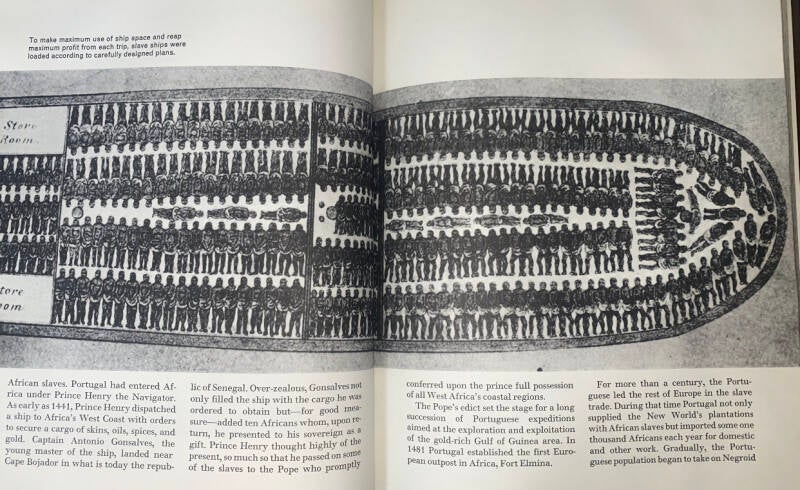
"Pope Nicholas The V in that famous bull, by which granted the unknown world(America) to the Portuguese and Spaniards, expressly permitted and ordered the Christians to reduce all infidels (Non-Believers) into Slavery."
Reference:
- The Critical Review or Annals Of Literature; By A Society Of Gentlemen Vol 57 London printed for
‘A. Hamilton, in Falcon-court, fleet-street 1783
Pp. 140
________________________________________________________________

Who Is Esau?: Geneology From Eliphaz To Alexander


"That Alexander was the son of Philip is a fact, too evident to be concealed. His pedigree is stated by the most celebrated genealogists in this way:
Philip.
Hermes.
Meton.
Rome.
Yinân.
Yafeth.
Rimiya.
Byzantium.
Theophil.
Rome.
Al'aşfar.
Elifaz.
Esau.
Isaak.
Abraham"
Reference:
THE CHRONOLOGY OF ANCIENT NATIONS AN ENGLISH VERSION OF THE ARABIC TEXT OF THE ATHÂR-UL-BÅKIYA OF ALBIRON OR "VESTIGES OF THE PAST," COLLECTED AND REDUCED TO WRITING BY THE AUTHOR IN A.H. 390—1, A.D. 1000. TRANSLATED AND EDITED, WITH NOTES AND INDEX, BY Dr. C. EDWARD SACHAU PROFESSOR IN THE ROYAL UNIVERSITY OF BERLIN.
Pp.48-49
[Here we see extra-biblical scholarship connecting Alexander The Macedonian, directly to Esau. It is also note worthy to mention Rome listed among the decendants of Esau]
Agag and Macedon, Interchangeable From 2nd Temple Israelite Perspective


Gesenius' Hebrew-Chaldee Lexicon:

The Origins Of Amalek:

[It is note worthy to mention that the geneology of Esau in The Hebrew Bible match previous sources provided, with Esau being the father of Elifaz, the son of Isaac and grandson to Abraham; 1 Chronicles 1:34-36]
The Book Of Obadiah Trasnlated From The Hebrew Masoretic Text (1:1-15)
1 "The vision of Obadiah. Thus saith YHWH ALHYM concerning Edom/Esau; We have heard a rumour from the Lord, and an ambassador is sent among the heathen, Arise ye, and let us rise up against her in battle.
2 Behold, I have made thee small among the heathen: thou art greatly despised.
3 The pride of thine heart hath deceived thee, thou that dwellest in the clefts of the rock, whose habitation is high; that saith in his heart, Who shall bring me down to the ground?
4 Though thou exalt thyself as the eagle, and though thou set thy nest among the stars, thence will I bring thee down, saith the Lord.

If thieves came to thee, if robbers by night, (how art thou cut off!) would they not have stolen till they had enough? if the grapegatherers came to thee, would they not leave some grapes?
6 How are the things of Esau searched out! how are his hidden things sought up!
7 All the men of thy confederacy have brought thee even to the border: the men that were at peace with thee have deceived thee, and prevailed against thee; they that eat thy bread have laid a wound under thee: there is none understanding in him.
8 Shall I not in that day, saith the Lord, even destroy the wise men out of Edom, and understanding out of the mount of Esau?
9 And thy mighty men, O Teman, shall be dismayed, to the end that every one of the mount of Esau may be cut off by slaughter.

10 For thy violence against thy brother Jacob shame shall cover thee, and thou shalt be cut off for ever.
11 In the day that thou stoodest on the other side, in the day that the strangers carried away captive his forces, and foreigners entered into his gates, and cast lots upon Jerusalem, even thou wast as one of them.
12 But thou shouldest not have looked on the day of thy brother in the day that he became a stranger; neither shouldest thou have rejoiced over the children of Judah in the day of their destruction; neither shouldest thou have spoken proudly in the day of distress.
13 Thou shouldest not have entered into the gate of my people in the day of their calamity; yea, thou shouldest not have looked on their affliction in the day of their calamity, nor have laid hands on their substance in the day of their calamity;
14 Neither shouldest thou have stood in the crossway, to cut off those of his that did escape; neither shouldest thou have delivered up those of his that did remain in the day of distress.
15 For the day of the Lord is near upon all the heathen: as thou hast done, it shall be done unto thee: thy reward shall return upon thine own head."
_________________________
The Evolutionary Origin of Light Skin: Genetic Evidence from SLC24A5 Research

Abstract
Human skin color variation is a product of genetic mutation. One of the most significant discoveries in pigmentation genetics came from the work of Dr. Keith C. Cheng and colleagues at Penn State College of Medicine. Using zebrafish as a model organism, Cheng’s team identified a mutation in a gene affecting melanosome function that corresponds to a major contributor to light skin pigmentation in Europeans. This article explains the genetic mechanism, experimental process, and scientific conclusions demonstrating that light skin arose through specific genetic mutation.

Introduction
All modern humans share common African ancestry. The earliest Homo sapiens possessed darkly pigmented skin, an adaptation to high ultraviolet (UV) radiation environments near the equator. One of the clearest molecular explanations for lighter skin pigmentation comes from research on the gene SLC24A5, identified through zebrafish experimentation by Dr. Keith C. Cheng and collaborators.

Melanin, Melanosomes, and Pigmentation
Skin color is primarily determined by melanin, a pigment produced inside specialized cells called melanocytes. Within these cells are organelles known as melanosomes, which synthesize, store, and transport melanin.
Darker pigmentation is generally associated with:
- Larger melanosomes
- Greater melanosome density
- Higher melanin content
Lighter pigmentation is associated with:
- Smaller melanosomes
- Reduced melanin production
- Altered melanosome ion balance
The question Cheng’s lab sought to answer was: What gene controls these structural differences?
The Zebrafish “Golden” Mutation
Dr. Cheng’s team studied a naturally occurring zebrafish mutant known as the “golden” strain. Compared to wild-type zebrafish, golden zebrafish exhibit:
- Lighter pigmentation
- Smaller and fewer melanosomes
- Reduced melanin density
Through positional cloning and genetic mapping, the researchers identified the mutation responsible: a defect in the gene slc24a5.
The slc24a5 gene encodes a potassium-dependent sodium/calcium exchanger involved in ion transport within melanosomes. Proper ion balance is critical for melanin production and melanosome maturation. When the gene is altered, melanosome function changes, reducing pigmentation.

Importantly, when the normal slc24a5 gene was reintroduced into golden zebrafish embryos, pigmentation was restored. This demonstrated a direct causal relationship between the gene and pigment production.
Human Relevance: The SLC24A5 Variant
The zebrafish slc24a5 gene has a human homolog known as SLC24A5. After identifying the gene in zebrafish, Cheng’s team and collaborators examined human populations.
They discovered that a specific single nucleotide polymorphism (SNP) in SLC24A5 — known as A111T (alanine to threonine substitution at position 111) — is strongly associated with lighter skin pigmentation in European populations.
Key findings:
- The derived A111T allele is present at very high frequency in Europeans.
- It is rare or absent in many Sub-Saharan African populations.
- The allele significantly reduces melanin production.
- Statistical analysis suggests strong positive selection for this mutation in low-UV environments.
This evidence demonstrates that lighter skin in Europeans is not the ancestral state, but rather the result of a specific genetic mutation.
(A critical piece of evidence supporting the role of SLC24A5 in human pigmentation is the single nucleotide polymorphism (SNP) known as rs1426654. This SNP represents a specific DNA position within the SLC24A5 gene where two possible variants occur: the ancestral G allele and the derived A allele. The A variant produces an amino acid substitution (Alanine to Threonine at position 111, A111T) that alters melanosome function and reduces melanin production. Population genetic data show that the derived A allele is present at very high frequency in individuals of European ancestry (CEU) but remains rare in many African (YRI), East Asian (CHB), and Japanese (JPT) populations. This striking allele frequency difference demonstrates that the lighter-skin–associated version of the gene is not ancestral, but rather a mutation that arose after human migration out of Africa and subsequently increased in frequency due to natural selection in low-UV environments. The rs1426654 variant therefore provides direct molecular evidence linking a specific genetic mutation to the evolution of lighter human skin pigmentation.)

Conclusion
Dr. Keith Cheng’s zebrafish research provided experimental proof that changes in melanosome biology can result from mutation in the slc24a5 gene. The discovery that the human SLC24A5 gene contains a variant strongly associated with European light skin demonstrates that lighter pigmentation emerged through an identifiable genetic mutation.
This research stands as one of the clearest molecular examples of how physical diversity arises through genetic changes in humans.
References
Lamason, R. L., Mohideen, M.-A. P. K., Mest, J. R., Wong, A. C., Norton, H. L., Aros, M. C., … Cheng, K. C. (2005). SLC24A5, a putative cation exchanger, affects pigmentation in zebrafish and humans. Science, 310(5755), 1782–1786.
Cheng, K. C., & colleagues. Penn State College of Medicine. Research on zebrafish pigmentation genetics.
Norton, H. L., Kittles, R. A., Parra, E., et al. (2007). Genetic evidence for the convergent evolution of light skin in Europeans and East Asians. Molecular Biology and Evolution, 24(3), 710–722.
Jablonski, N. G., & Chaplin, G. (2000). The evolution of human skin coloration. Journal of Human Evolution, 39(1), 57–106.
Esau & Light Skin

Gesenius' Hebrew-Chaldee Lexicon: "Bare"

(Joel 1:7 “He hath laid my vine WASTE, and barked my fig tree: he hath made it CLEAN BARE, and cast it away; the branches thereof are made WHITE.”)
What Was Stripped From Esau?

This image shows a split-screen comparison of a caucasian woman applying sunscreen under a specialized ultraviolet (UV) camera. On the left, she appears in natural light, gently pressing sunscreen onto her face and neck. On the right, the same scene is captured through a UV-sensitive camera, which reveals how the sunscreen spreads across the skin. Under UV imaging, properly applied sunscreen appears darker because it absorbs ultraviolet radiation. Similar to melanated skin.

An image of a dark-skinned woman under similar lighting conditions illustrate the protective role of melanin in human skin. Higher levels of eumelanin act as a natural ultraviolet (UV) filter by absorbing and dispersing harmful radiation before it can damage DNA in skin cells. Because of this increased natural photoprotection, individuals with darker skin tones have a lower overall risk of developing UV-induced skin cancers compared to individuals with very light skin. Humans with dark skin have a protective layer called melanin, but spoiled seed (mutated genes in Caucasians) is bare, stripped of the necessary melanin to hide from the sun.
Create Your Own Website With Webador